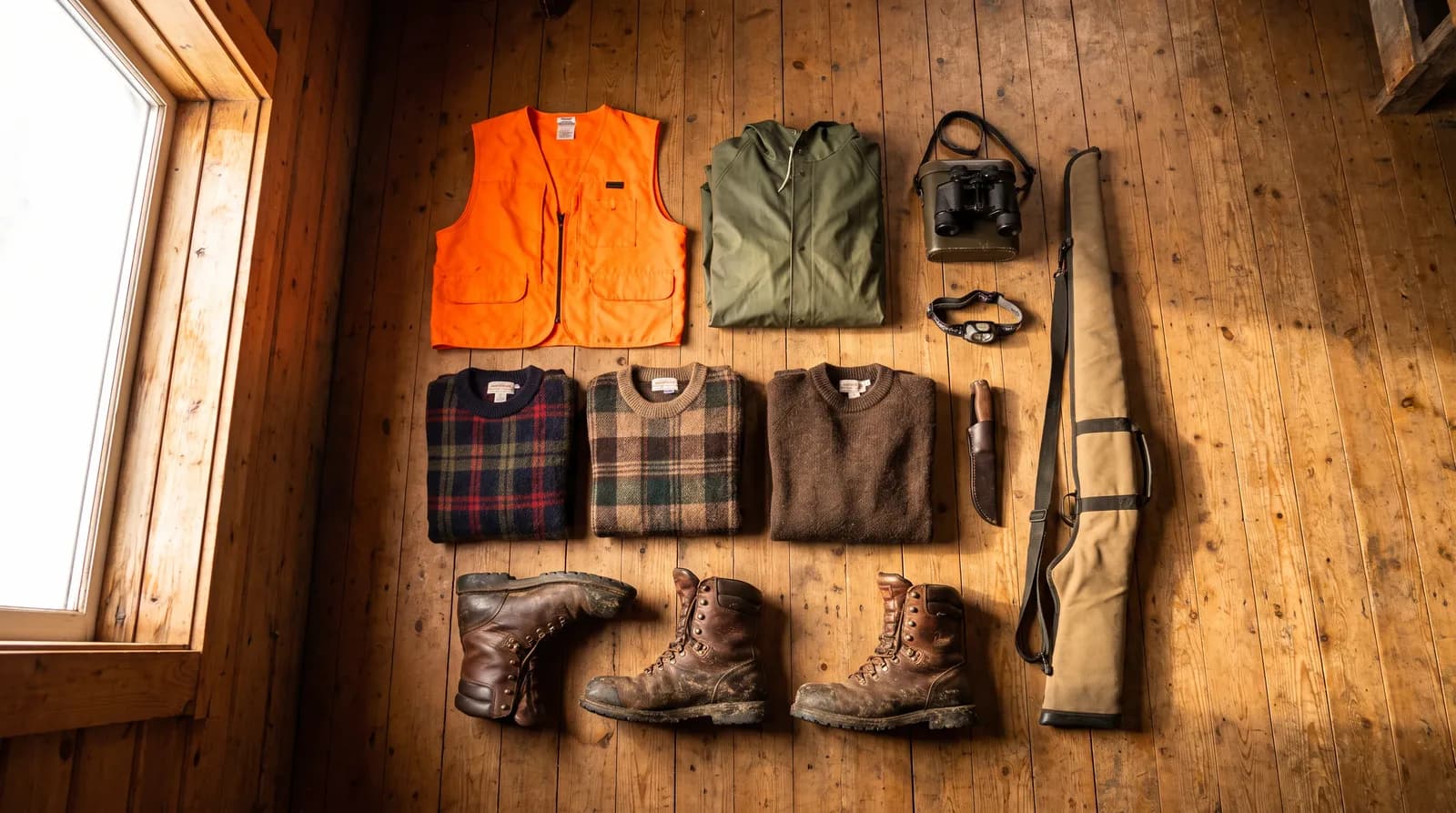
Your outfitter's own gear list comes first. Camps differ in what they supply, and fly-in camps usually set a baggage weight limit. Use this list to fill the gaps and to ask the right questions.
Documents
These are the items most likely to stop a trip if they're missing:
- Passport or other accepted travel document.
- Proof of hunter education. Non-residents must have proof of meeting their home jurisdiction's hunter education requirements and produce it when a conservation officer asks.
- Non-Resident Firearm Declaration (RCMP 5589), filled in but not signed until a border officer witnesses it, if you're bringing a rifle. See rifle and ammo for moose.
- Booking confirmation and the outfitter's contact details. Your licence is arranged through the outfitter, so confirm what they need from you in advance.
- Travel and medical insurance details, including any evacuation cover if you're going to a remote camp.
You'll also need a game export permit to take moose meat out of the province. The province says these are free from Forestry, Agriculture and Lands offices and licensed outfitters, so ask your outfitter how it's handled.
Clothing: layers, not bulk
Fall weather in Newfoundland can be mild one day and cold, wet and windy the next, especially later in the season. Layers let you adjust between a long walk in and a long sit.
- Base layers: moisture-wicking synthetic or merino tops and bottoms. Avoid cotton.
- Mid layers: fleece or wool, plus an insulated jacket for glassing and sitting.
- Outer shell: a quiet, fully waterproof rain jacket and rain pants. This is one of the most important items on the list.
- Hat, neck gaiter and gloves: bring a light pair and a warm pair of gloves, and a spare set in case one gets soaked.
- Blaze orange: the provincial Hunting and Trapping Guide urges hunters to wear blaze orange. Ask your outfitter what they expect you to wear, and bring an orange hat and vest at minimum.
- Camp clothes: something dry and comfortable for evenings.
Boots
Moose country here means bogs, barrens, wet woods and creek crossings.
- Waterproof boots are essential. Many hunters bring knee-high rubber boots for bog walking as well as insulated waterproof hunting boots. Ask your outfitter which suits their ground.
- Wool or synthetic socks, plenty of pairs.
- Gaiters, if you're wearing shorter boots.
- Break in new boots before the trip.
Optics and hunting gear
- Binoculars. You'll spend a lot of time glassing cutovers and bog edges.
- Rangefinder, if you use one.
- Rifle, sling and ammunition, in a hard or soft case that meets your airline's rules. Check that your ammunition meets the provincial big game rules.
- Rifle cover or tape to keep rain out of the muzzle.
- Day pack with a rain cover, big enough for layers, water and lunch.
- Knife and sharpener, unless your guide handles all field dressing. Ask.
- Headlamp and spare batteries.
Personal items
- Medications in original containers, plus a small personal first aid kit.
- Insect repellent and a head net, especially early in the season.
- Water bottle, sunglasses, lip balm and hand warmers.
- Phone charger and power bank. Drive-to lodges may have power and service; remote camps often don't.
- Cash, for the guide and camp staff tip if you plan to leave one.
Meat and trophy
Plan this before you go. A moose yields a lot of meat, and how it gets home affects the cost and logistics of the whole trip.
- Ask whether the outfitter quarters and transports the animal, and whether cutting, wrapping and freezing are included or extra.
- Bring or arrange coolers, or ask about local butchering and shipping.
- Under provincial rules, tags must be attached and locked on the animal before it is moved from the place of kill, and on a male-only licence proof of sex must stay attached to one hindquarter. Only new wrapping material may be used to export game; used burlap or bags are prohibited.
- If you want antlers or a cape, ask how they're handled and how they'll travel. Hunters returning to the United States must declare all game entering the country.
What to leave at home
- Cotton jeans and hoodies that stay wet.
- More than you can carry, especially for a fly-in camp with a weight limit.
- Anything your outfitter already supplies, such as bedding or cooking gear. Ask first.
Next step
Browse moose outfitters, or look by area at the Western Region, the Central Region or the Eastern Region. Still choosing a camp? Read fly-in vs drive-to outfitters and what a moose hunt costs, or get matched with a licensed outfitter.