Neither kind of camp is better in general. It depends on what you want from the trip, how you hunt or fish, and how much flexibility you have with dates. Confirm the details of any specific camp with the outfitter, in writing.
What the terms mean
- Drive-to: you reach the lodge or camp by road, sometimes on a gravel resource road for the last stretch. Many drive-to outfitters run a main lodge and use trucks, ATVs or boats to reach the hunting area each day.
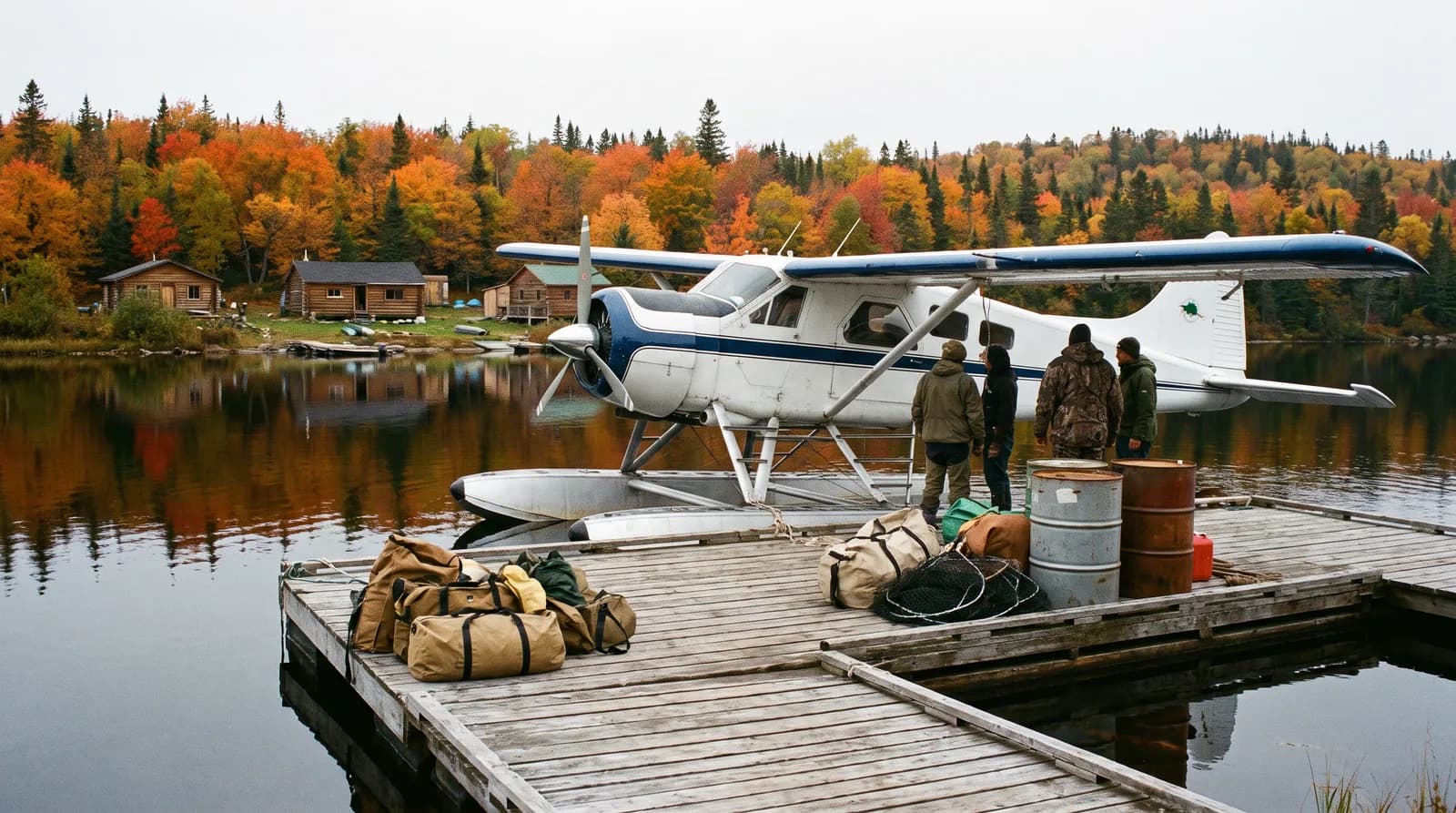
- Fly-in: you are flown from a base, often by floatplane or helicopter, to a remote camp with no road access. You stay at that camp for the trip and hunt or fish from it.
- Boat-in and hybrids: some camps are reached by boat across a pond or lake, or are drive-to with an optional fly-out to a remote outcamp.
Ask exactly how you get from the airport to camp, and who arranges and pays for each leg.
Access and travel days
Drive-to trips usually have simpler logistics. You can arrive on your own schedule, and if you're late or a flight is delayed, you can often still make camp.
Fly-in trips add a flight leg that depends on the weather. Low cloud, fog or wind can delay a floatplane or helicopter going in or coming out. That can cost you hunting or fishing days at the start, or leave you in camp past your planned departure. Build in a buffer day before any connecting flight home, and ask the outfitter how they handle weather delays.
Cost
Fly-in trips often cost more because the flight, fuel and remote camp supply are built into the price. Drive-to packages are often less expensive, but compare what each one includes. A lower price can leave out meals, transport or meat handling. See what a moose hunt costs for how to compare quotes like for like.
What you can bring
Aircraft have weight and size limits for baggage, and fly-in outfitters will usually give you a limit for gear per person. That affects:
- How much clothing and gear you bring, and what kind of bags. Soft duffels are often preferred over hard cases for floatplanes.
- Firearm cases, rod tubes and coolers.
- Your meat and trophy coming out. A moose is a lot of weight, so ask how meat leaves a fly-in camp, whether on your flight, a later flight, or at extra cost.
Drive-to camps are usually more forgiving on gear, and you can often bring a cooler or freezer arrangement for meat. See what to pack for a moose hunt.
Hunting and fishing pressure
Remote fly-in areas may see less pressure from other hunters and anglers because they're hard to reach. Drive-to areas can be closer to roads and towns, which can mean more people in the woods, though a good outfitter will know where to go.
For anglers, the access rules also matter. On the island and in Labrador south of 52°N, non-residents need a licensed guide or a resident direct relative on scheduled salmon waters. In Labrador north of 52°N, non-resident trout and salmon anglers must use an outfitter, fish at a co-operative camp, or be accompanied by a direct relative. Many of the province's remote Labrador fishing camps are fly-in. Check the current DFO Anglers' Guide for the rules where you plan to fish.
Camp comfort
- Drive-to lodges may have power, showers, a cook and phone or internet service.
- Fly-in camps range from basic cabins or tent camps to well-equipped lodges. Ask about power, heat, bedding, washrooms, cell or satellite communication, and who cooks.
Ask for recent photos of the actual camp you'll stay in, not just the main lodge.
Safety and emergencies
At a remote camp, help is further away. Ask the outfitter:
- What communication is available, such as a satellite phone or messenger?
- What is the plan if someone is hurt or ill and the weather is too poor to fly?
- Is there a first aid kit, and does the guide have first aid training?
Consider whether your travel insurance covers evacuation from a remote area.
Which suits you?
A drive-to trip may suit you if you:
- Want simpler travel with fewer weather risks
- Are bringing more gear, or want to drive your own vehicle
- Are watching cost, or travelling with a group of mixed experience
A fly-in trip may suit you if you:
- Want a remote setting with fewer people around
- Can be flexible about travel dates
- Are comfortable with a gear weight limit and basic camp facilities
Next step
Browse moose outfitters or Atlantic salmon outfitters, or look by area at Labrador, where much of the country is reached by air, or the Central Region. To weigh your options with us, get matched with a licensed outfitter.