This is a plain-language overview, not legal advice. Border and wildlife import rules are set by several agencies and can change, sometimes at short notice because of animal disease. Confirm the current rules with each agency named below before you travel.
Start with your outfitter
Ask your outfitter how meat is handled before you book. Many moose outfitters work with a local butcher or processor, and some can arrange freezing, storage or shipping. Ask:
- Who cuts, wraps and freezes the meat, and what that costs
- Whether meat can be boned out, and how it is labelled
- Whether they can store meat if you can't take it with you
- Whether they work with a taxidermist, and how antlers or capes are shipped later
Meat handling, cutting and shipping are often extra to the package price. See what a moose hunt costs for what is usually included.
Get a game export permit
Under the provincial hunting and trapping guide, hunters need a game export permit to take game out of Newfoundland and Labrador. The guide says the permits are free from Department of Forestry, Agriculture and Lands offices, and the province's non-resident page says they are also available from licensed outfitters. Your outfitter will usually know the local process. Keep the permit with your licence and the meat.
Declare everything at the US border
The provincial guide states that hunters must declare all game entering the United States from Canada. Declare meat, antlers, hides and any other parts to US Customs and Border Protection (CBP) whether you drive or fly. Undeclared animal products can be seized and can lead to penalties.
Moose meat
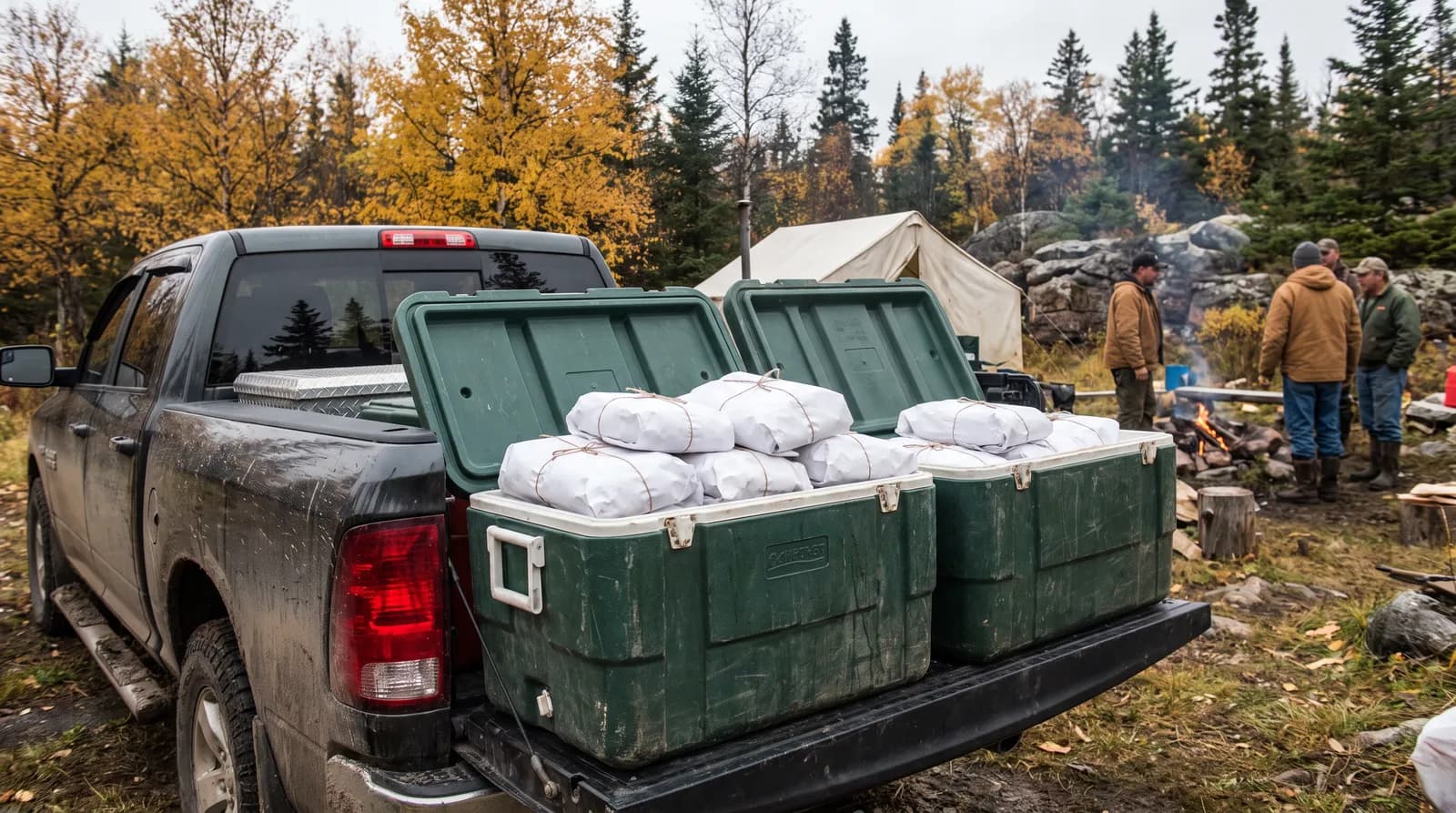
CBP guidance, as quoted by hunting publications, says hunter-harvested wild cervid meat from Canada (deer, moose, elk, caribou) may be allowed entry when it comes with proof of species, such as labelling or a receipt from the processing facility. In practice that means:
- Keep the processor's receipt and make sure packages are labelled as moose
- Pack the meat so an officer can inspect it
- Carry your licence, tags and export permit
Questions about animal products go to USDA APHIS (Animal Products Import and Export). Contact them before your trip if anything about your shipment is unusual, such as a whole or partial carcass.
Antlers and trophies
Moose is not listed under CITES, so a moose trophy does not normally need a CITES export permit. Black bear is different: the province notes that non-resident bear hunters need a CITES permit to transport black bear parts outside Canada. If you are on a moose and bear combination hunt, sort that out with your outfitter.
The US Fish and Wildlife Service (USFWS) generally requires wildlife imports, including sport-hunted trophies, to be declared, typically on Form 3-177. Which ports handle wildlife, and whether an inspection or fee applies, depends on how and where you cross. Check the USFWS Office of Law Enforcement's current guidance for importing personal sport-hunted trophies, or call the port you plan to use.
Check your home state's CWD rules
This is the one hunters most often miss. Many US states restrict bringing cervid carcasses into the state to limit the spread of chronic wasting disease (CWD), and the rules often apply to moose from any state or province. The common pattern is:
- Usually allowed: deboned meat, cut and wrapped meat, hides, antlers, skull caps cleaned of all brain tissue, and finished taxidermy
- Usually not allowed: whole carcasses, heads, and spinal or neck bones
Some states also require labels showing your name, address, where and when the animal was taken, and your licence number. The details vary, so check your state wildlife agency's carcass import page before the hunt and tell your outfitter what you need. It is much easier to have meat deboned and a skull cap cleaned in camp than to sort it out at the border.
Driving versus flying
Driving. Many hunters drive home with meat in coolers or chest freezers via the ferry to Nova Scotia. You keep control of the meat, but plan for ice or freezing along the way and a full inspection at the border.
Flying. Airlines set their own rules for checked coolers, weight and dry ice, so check with your airline before you go. Hunters who fly often bring home only part of the meat and arrange for the rest to be shipped, stored or donated locally. Ask your outfitter what options exist in their area.
Shipping antlers and capes. Antlers and capes are often left with a taxidermist or shipped later. If someone else ships your trophy, ask who handles the export and import paperwork and who pays any brokerage fees.
A short checklist
- Hunting licence and tags
- Provincial game export permit
- Processor receipt and labelled packages
- CITES permit, if you also took a black bear
- USFWS declaration, if bringing a trophy
- Your home state's CWD import rules, printed or saved
Next step
Ask any outfitter you are considering how they handle meat and trophies. Browse moose outfitters, look by area such as Central or Western, or tell us about your trip and we'll help you find a fit. If you're travelling from outside the province, read the non-resident hunting rules too.