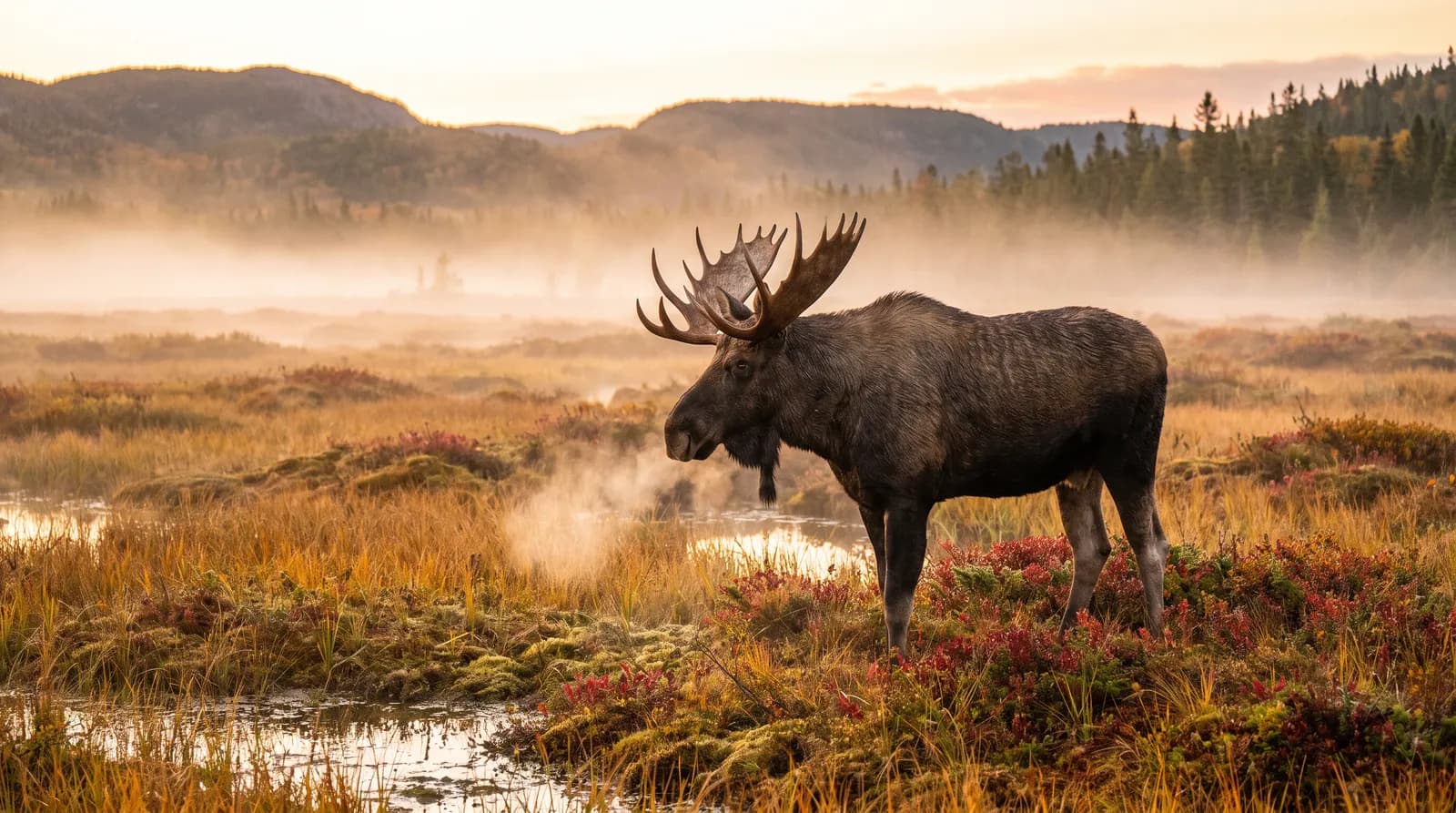
Season dates are set each year in the provincial hunting and trapping guide, and they differ by moose management area. Check the current guide and your outfitter's area before booking.
How long the season is
In the 2026-27 guide, most island moose management areas open on September 12 and close on December 31. Bow hunting (not including crossbows) starts earlier, on August 29, in areas that open on September 12. A few areas, including zones in the national parks, open later and run into January. In 2025-26, Labrador moose areas ran from mid-September into March.
Most non-resident packages are sold for the early and middle parts of the season, but that varies by outfitter.
Early season and the rut
The rut is the breeding season, when bulls are on the move and respond to calls. In Newfoundland it generally builds from the second half of September into early October. Guides and outfitters commonly describe late September to mid-October as the peak, but the exact timing shifts a little from year to year and with weather.
What it's like:
- Bulls respond to cow calls and grunts, and calling is often the main way of hunting
- Mild weather, with warm afternoons possible early in the season
- Insects can still be around in the first weeks
- Leaves are on the trees, which shortens visibility in thick cover
Things to plan for:
- Warm days mean meat must be cooled quickly. Ask how the outfitter handles meat in warm weather.
- Rut weeks are popular, so they tend to book early
Mid-season
After the peak of the rut, bulls generally become harder to call and more reclusive. Hunting often shifts toward still hunting, glassing cutovers and bogs, and covering ground.
What it's like:
- Cooler temperatures, which help with meat care
- Leaves dropping, which improves visibility
- Fewer insects
- Fall colours in October
For hunters who don't need to call a bull in, mid-season can be a good balance of comfortable weather and easier meat handling.
Late season
From November to the end of the season, weather becomes the main factor. Snow can make tracking easier, and moose may move in response to cold and snow. It can also make travel by road, boat or ATV more difficult.
What it's like:
- Cold, wind and possible snow
- Shorter days
- Calling is generally less effective
- Fewer hunters in the woods
Things to plan for:
- Ask whether the camp is heated and accessible in winter weather
- Bring proper cold-weather clothing and boots
- Check whether your outfitter even offers late-season dates; not all do
Rut vs late season at a glance
| Rut (late Sept to mid-Oct) | Late season (Nov to Dec) | |
|---|---|---|
| Main method | Calling | Still hunting, tracking, glassing |
| Weather | Mild to cool | Cold, snow possible |
| Meat care | Needs quick cooling | Easier |
| Visibility | Leaves on | Leaves off |
| Demand | High | Usually lower |
Success rates and timing
The provincial guide publishes an overall success rate for each moose management area. It does not break those rates down by week, and the rates include resident hunters. Use them as a guide to the area, not to the week. Ask your outfitter for their own results by week or month, and how they calculate them. How to choose an outfitter has more on reading success rates.
How to pick your week
- If you want to call a bull in, aim for the rut weeks and book early.
- If meat care and comfortable weather matter most, look at mid-season.
- If you want quieter woods and don't mind cold, ask about late season.
- If you're combining species, ask how the dates line up. Black bear and fishing seasons have their own dates.
Whatever you pick, ask the outfitter what their best weeks are in their area and why. They know their ground.
Next step
Browse moose outfitters or look by area, such as Western or Central. If you already know your dates, tell us about your trip and we'll help you find outfitters with openings. See also what a moose hunt costs.